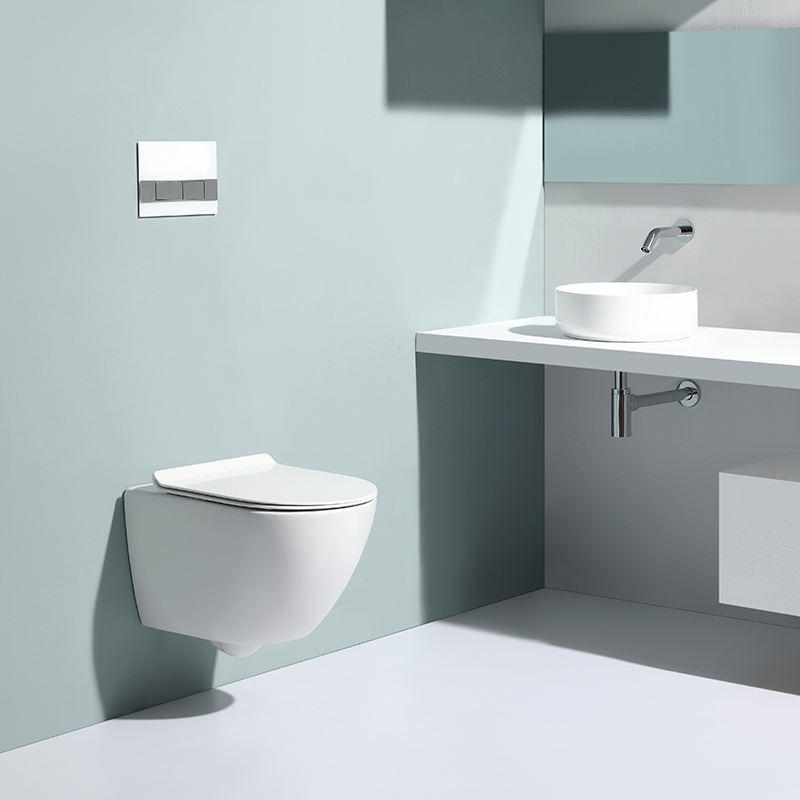
Installing a wall-hung toilet in residential or commercial buildings in Germany requires a meticulous approach that balances efficiency, compliance with regional standards, and aesthetic preferences. As modern bathroom designs increasingly favor minimalist, space-saving fixtures, wall-hung toilets have emerged as a leading solution across German households.
1. Understanding the Local Regulations and Standards
Germany enforces strict building codes and plumbing standards. Before installing a wall-hung toilet, it’s critical to ensure compliance with DIN standards, particularly DIN EN 997 for WC performance and DIN 1986-100 for drainage systems. These regulations govern flushing performance, wastewater drainage, and structural integrity.
In apartments or multi-story homes, the load-bearing capacity of the bathroom wall is assessed before selecting a concealed carrier system. Carriers must support up to 400 kg to meet the durability standards common in Germany.
2. Selecting the Right Mounting System
A concealed cistern and mounting frame form the backbone of a wall-hung toilet system. Leading brands like Geberit, Grohe, and Viega offer frames specifically designed for the German market. Homeowners can choose between floor-mounted or in-wall carrier systems depending on wall type (solid masonry vs. stud wall).
Modern systems offer water-saving dual-flush technologies, aligning with Germany's environmental values and water conservation targets. Selecting a cistern with a volume control between 3L and 6L can significantly reduce household water consumption.
3. Plumbing and Flushing Configuration
In Germany, plumbing setups prioritize quiet, efficient operation. Installing noise-insulated supply and discharge pipes is encouraged, especially in multi-family dwellings. Many wall-hung toilet models include silent flush valves to minimize noise disturbance—a critical feature in shared living environments.
The cistern and flushing system must be compatible with Germany's standard 230V electricity supply if integrated with smart or sensor-based functionalities.
4. Height and Positioning Considerations
The standard installation height for a wall-hung toilet in Germany is around 42 cm from floor to seat. However, customizable frames allow homeowners to adjust the height to meet accessibility or ergonomic needs, a common requirement in elderly or inclusive design projects.
To comply with German accessibility standards (DIN 18040), installing at a height of 46–48 cm may be necessary in public or assisted living facilities.
5. Aesthetic Integration and Maintenance
One of the primary reasons Germans favor wall-hung toilets is their sleek look and ease of cleaning. Tiles and wall finishes can be seamlessly integrated around the frame, with the flush plate often doubling as a service panel for maintenance access.
Brands offer a wide array of flush plate designs and materials, from stainless steel to glass, allowing homeowners to match the toilet’s aesthetics to the broader bathroom theme.
READ MORE: